Share the Music!

Genre: 90s artists

DJ BOBO

DJ BOBO

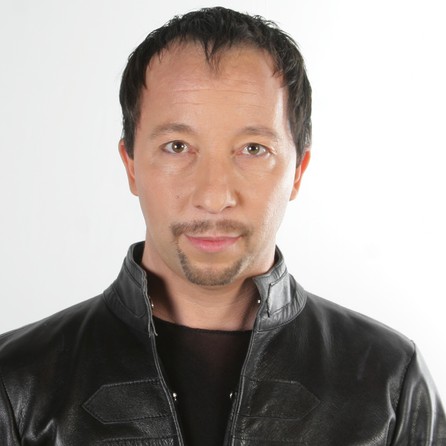
DJ BOBO (whose real name is René Baumann) is a producer, composer, writer, singer and dancer in one person.

After having graduated from high school René decided to become a confectioner’s and baker’s apprentice (1984).
But at this time, the time of breakdance and electric boogie, he more and more felt his calling to music…

In 1987 he reached the top 10 of the German “Disco Kings’” with his acrobatic dance style. In Switzerland he even won the Swiss Championship in showdancing.
In the 1985 DJ BoBo began his career as a DJ. Only one year after that he was runner-up in the Swiss DJ Championships.

The first DJ BoBo single I Love You was created (at the end of 1989). This was followed by the first DJ BoBo tour which led him through various Swiss discos.
After the two singles Ladies In The House (1991) and Let’s Groove On, there also was a second (clubs) and third (small arenas) DJ BoBo Swiss tour.

He had finally his breakthrough with the smash hit Somebody Dance With Me: It became a number one in the Swiss Single Charts in March 1993. Being in the top 10 in many countries all over the world, his extraordinary success was rewarded with a Golden Record in Germany, Austria and Switzerland as well as in Israel and Australia.

With his second hit Keep On Dancing (summer 1993) DJ BoBo proved that he was not only a so called ‘one hit wonder’.
The long expected album Dance With Me was awarded a platinum record in Switzerland and remained in the charts all over Europe for quite a while.
The single Take Control went gold in Germany and reached top positions in the charts of many countries.

In the summer of 1994, DJ BoBo had a big hit with the single Everybody which climbed up to number 2 in the German Single Charts, stayed there for many weeks, and was awarded a platinum record for 500,000 sold units in Germany.
In the fall of the same year the second album There Is A Party was released containing the smash hit Let The Dream Come True which reached gold, too. In January 1995, Love Is All Around was released; it reached top 10 positions in many countries all over the world, and in Germany was awarded with the sixth Golden Record in a row!

Within the scope of his tour in South America, which took place in February and March, DJ BoBo earned great response from his fans.
The summer hit There Is A Party also went storming through the charts, accompanied by the fantastic video which was shot by the Miami Vice camera team.
In the summer of 1995, DJ BoBo went on a tour which led him through most parts of Asia. Among other locations he also performed in the Olympic Stadium of Seoul. Then he did a promotion tour in Australia.
Later that year DJ BoBo traveled all over Europe (this time accompanied by 25 technicians with extremely fancy tour equipment), fascinating more than 400,000 spectators with his new live crew of eight people and a perfect choreography.

On 14th January, 1996, DJ BoBo introduced his first ballad Love Is The Price in Thomas Gottschalk’s TV show ‘Wetten Dass. . .’.
In March he began his first tour in Switzerland with more than 40,000 people to enjoy ten concerts in ten days were the “Backstreet Boys” were special guests!
Freedom was another DJ BoBo single to be awarded gold in Germany, which made him a record holder in Germany as he was the first artist in the field of ‘Dance’ Music who received eight Golden Records in a row.

In the summer of 1996 DJ BoBo and his crew started the organization of the gigantic ‘World In Motion’ tour. This show, a glamorous and mixture between musical, concert and show topped all expectations. While DJ BoBo was still working on new songs (all in all 31 songs were composed; net working hours in the studio: 1054, without writing lyrics and composing), the preparations for the conception of the stage as well as the booking of the concert arenas was in full progress. For the video for Pray a stage was especially set up, and about 1000 fans were invited as audience.

On Michael Jackson’s ‘History tour’ DJ BoBo and his crew were able to show their skills as support act at his concerts in Prague (160,000 people), Bucharest (35,000 people), Moscow (70,000 people) and Warsaw (70,000 people). For DJ BoBo a dream came true. However, at the same time this was a very busy period in everybody’s lives as those concerts simultaneously took place with DJ BoBo’s World In Motion European tour (about 27 concerts in Europe’s largest arenas) were ‘N SYNC were special guests!

With the release of the album World In Motion at the end of September 1996 he broke all previous records. In only three weeks it achieved position three in Germany and was awarded Platinum for 500,000 sold units. In Switzerland it even leaped from 0 to 1 and was awarded Double-Platinum (100,000 sold records)!
Then he went on promotion tour in Asia for twenty days. What is certainly worth mentioning here, is his appearance in Guangzhou (China) as he was the first Western artist to perform there.
In March 1997 DJ BoBo and his crew went on tour in South America (Brazil, Chile, Colombia) for one month. With their performance on the biggest TV show in Brazil they reached more than 25 million people. Right after this the video for the single It’s My Life was shot on one of the most beautiful islands in Venezuela.

On account of the enormous demand an additional tour of the World In Motion show was organized. One more time it led DJ BoBo and his crew to more than 20 arenas in Europe.
In July 1997 the fourth single of the CD Shadows Of The Night (with the brilliant insertions of the Vienna Symphonic Orchestra) was released. In September 1997 a special winter edition of the CD World In Motionwas made available containing the unreleased songs Can You Hear Me and the Queen remix of Radio Gaga.
At the end of March 1998, he released the long expected single Where Is Your Love. For the first time now he was able to show his singing skills, too. The video, full of the latest technical gimmicks, was shot at an old castle in Germany. All in all (rehearsals and video shooting) it took four days to realize this video. At the end of April, finally, the so far most emotional and diligent CD of DJ BoBo was available: MAGIC!
The album which was equipped with a flashing red light on the cover (limited LED edition) broke every single record. Right after it was out in the stores it leaped right from zero to one in the Swiss Charts and remained there for more than four weeks.

Even while still on the World In Motion tour, DJ BoBo and his crew began planning the new Magic show. The stage, which could miraculously be turned into various sceneries, was a construction of magic dimensions: 24 m in width, 14 m in length, an additional cat walk of 15 m with a 32 m² dancing area at its end.
As the Magic show’s premiere was so successful in August 1998, the ‘life on tour’ started again for DJ BoBo and his people. The gigantic show, a mixture between concert and magic, was performed in 35 concert arenas in Europe. All in all 250,000 people watched it! At the same time DJ BoBo released the third single of the Magic album: “Celebrate” (October 1998).

DJ BoBo and his crew had already begun planning the upcoming show a long time ago, they went on the Magic open air tour in June 1999 one more time, and performed the successful show again (five times).

Although his succes story has not come to an end, after 1999 he did very big shows (even Las Vegas) with lots of music and dancing, his internationally most important, successfully and recognised music period was 1992 up to 1997.
DEPECHE MODE

DEPECHE MODE

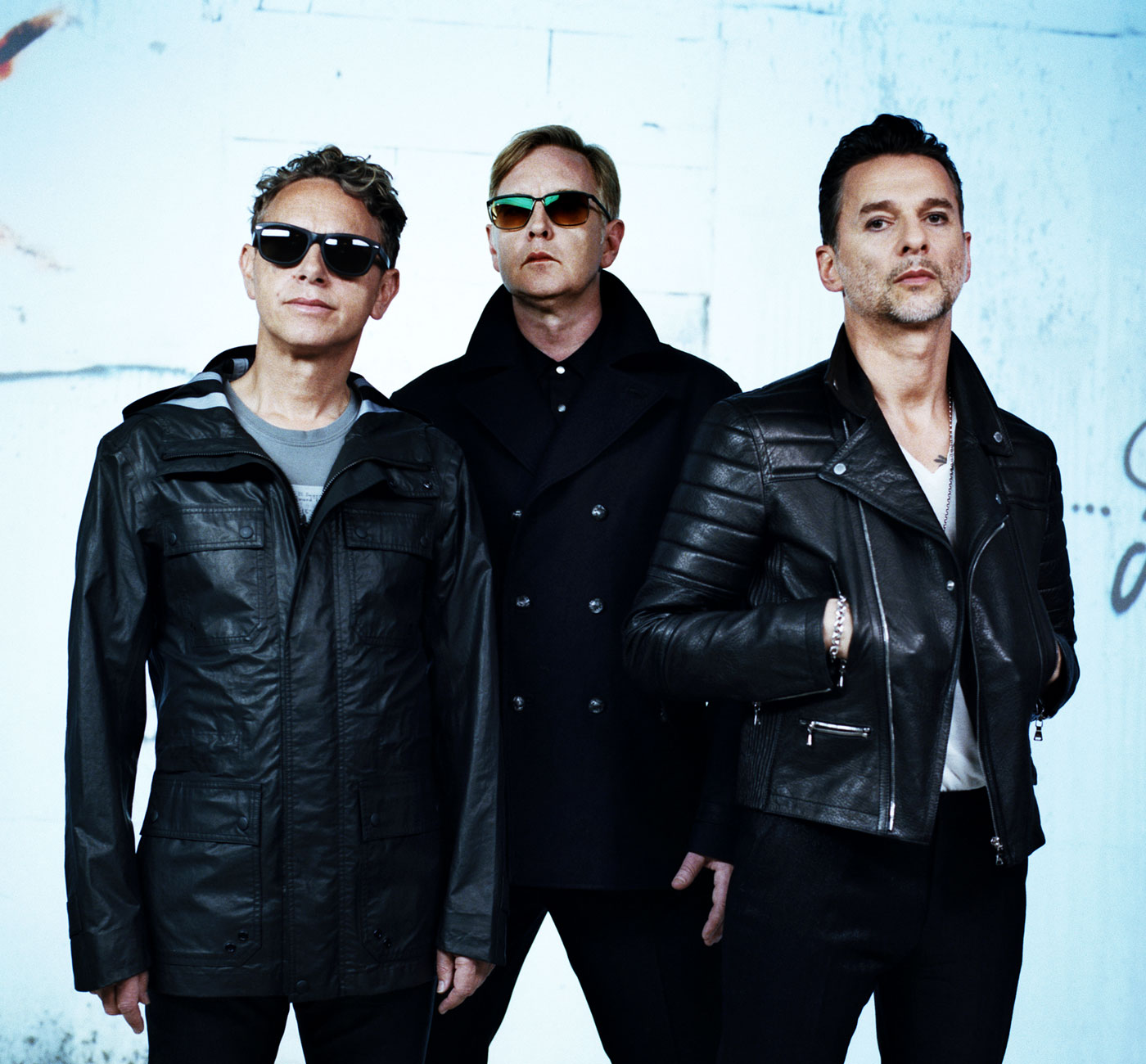
Depeche Mode are an English electronic band formed in 1980. The group’s original line-up consisted of Dave Gahan (lead vocals, occasional songwriter since 2005), Martin Gore (keyboards, guitar, vocals, chief songwriter after 1981), Andy Fletcher (keyboards), and Vince Clarke (keyboards, chief songwriter 1980–81). Depeche Mode released their debut record in 1981, Speak & Spell, bringing the band onto the British new wave scene. Clarke left the band after the release of the album, leaving the band as a trio to record A Broken Frame, released the following year. Alan Wilder (keyboards, drums, occasional songwriter) officially joined the band in late-1982, replacing Clarke, while Gore took over lead songwriting duties, establishing a line up that would continue for the next thirteen years.

The band’s last albums of the 1980s; Black Celebration and Music for the Masses established them as a dominant force on the mainstream electronic music scene. A highlight of this era was the band’s concert at the Pasadena Rose Bowl where they drew a crowd in excess of 60,000 people. In the new decade, Depeche Mode released Violator, catapulting them to massive mainstream success. The subsequent album, Songs of Faith and Devotion and the supporting Devotional Tour exacerbated tensions within the band to the point where Alan Wilder quit in 1995, leading to intense media and fan speculation that the band would split. Now a trio once again, the band released Ultra in 1997, recorded at the height of Gahan’s near-fatal drug abuse, Gore’s alcoholism and Fletcher’s depression. The release of Exciter confirmed Depeche Mode’s willingness to remain together, the subsequent, and very successful, Exciter Tour being their first tour in support of an original album in eight years since the Devotional Tour although the band had toured in 1998 to support The Singles 86>98 compilation album.

Depeche Mode have had 50 songs in the UK Singles Chart and thirteen top 10 albums in the UK charts, two of which debuted at No. 1. Depeche Mode have sold over 100 million records worldwide, making them the most commercially successful electronic band and one of the world’s best-selling bands in music history. Q magazine calls Depeche Mode “The most popular electronic band the world has ever known” and included the band in the list of the “50 Bands That Changed the World!”.

In October 2012 during a press conference in Paris, Dave Gahan, Martin Gore and Andy Fletcher announced plans to release a new album and a worldwide tour starting from Tel Aviv and continuing in Europe and North America in the year 2013. Martin Gore revealed that Flood mixed the album, marking the producer’s first studio collaboration with the band since 1993’s Songs of Faith and Devotion.

In December 2012, the band officially announced signing a worldwide deal with Columbia Records and releasing a new album in March 2013. On 24 January 2013, it was confirmed that the album was called Delta Machine. “Heaven”, the debut single from Delta Machine was released commercially on Friday 1 February 2013 (although not in the UK). The release date in the UK was pushed back to 18 March 2013

In March, the band announced North American dates to its ‘Delta Machine’ summer tour, starting 22 August from Detroit and ending 8 October in Phoenix. In June, other European dates were confirmed for early 2014. The final gig of Delta Machine Tour took place in Moscow (Russia) on 7 March 2014, at Olimpiski venue.

In March 2014, Depeche Mode won the award for “Best International Group – Rock / Pop” at the ECHO Awards in Germany. Also they were nominated at the category “Album des Jahres (national oder international)” for Delta Machine.

On October 8, 2014 the band announced Depeche Mode Live in Berlin, the new video and audio release filmed and recorded at the O2 World in Berlin, Germany on November 25 and 27, 2013 during the Delta Machine Tour. It will be released on November 17, 2014 worldwide.

CULTURE BEAT

CULTURE BEAT

How often have we all danced to tracks like Mr. VainAnything or Got To Get It by Culture Beat? Culture Beat’s claim to fame is closely connected with the history of German dance music. As early as 1989 the band caused a considerable stir in the German and UK charts with Erdbeermund (Cherry Lips). Further hits such as I Like You and Tell Me That You Wait from the Horizon album followed.

Then, in 1993, Serenity was released and Culture Beat won more or less every available dance and music prize that was up for grabs in Germany that year. Among other trophies, Torsten Fenslau was awarded the 1993 Echo prize, the highest German music industry award, for “Producer of the year” and Culture Beat the 1993 Echo for “Most successful German album abroad”.

The single Mr. Vain reached the no.1 spot in 12 different countries, including 9 weeks in Germany and 4 weeks in the UK, also reaching the Top 20 in the US Billboard Charts. In all, 4.5 million singles were sold worldwide and the album achieved sales exceeding 1.5 million.
At the end of 1993 the band’s success story was overshadowed by the tragic death of founder and producer Torsten Fenslau. The question of whether in the light of this there could be any further Culture Beat albums was quickly answered by Frank Fenslau, who vowed to carry on the business and follow in his brother’s footsteps. He kept his promise and he has definitely come up with the goods.

Two years passed and Inside Out was ready to hit the market, as a new musical age dawns for Culture Beat. The trance elements, Jay Supreme’s rapping, and the bitter-sweet voice of Tania Evans have been brought clearly to the fore without losing out on the music’s danceable quality, most clearly demonstrated on the emotional first single Inside Out.
Quality and originality has been Culture Beat’s trademark throughout the years and this is very obvious on the new album. In producing Inside Out, Frank Fenslau chose an approach which is considered unorthodox in the German dance scene, though perfectly normal for the UK or US. The album was not made by just one person, but by five different production teams (Peter Gräber/Frank Bülow, Perky Park, Cyborg, Doug Laurent, R.U.T.). Each track has its own different and special character, and there is hardly a dance album around to match its varied nature.

In February 1998 the single Pay No Mind was released in the Netherlands and Germany. Pay No Mind was the first single to feature Kim Sanders (Tanya Evans and Jay Supreme have left the act for solo careers). Kim Sanders has also had a solo-hit in Germany: Show Me and she also performed background vocals for the Frankfurt Connection (Jam & Spoon etc.). And there was the Steven Levis Project with Out Of My Mindperformed by Kim Sanders and Nosie Katzmann (Textwriter for almost every German Project). This single was the first pre-release of the 5th Culture Beat album called Metamorphosis which was released in the summer of 1998.
In March 1998 they released a 12Inch called Cherry Lips, it was Feat. Jo Van Nelsen. In May, 1998 the second single from the 5th album Metamorphosis was released, entitled Rendez-Vous and it has the same low tempo style as Pay No MindYou Belong was released in November 1998 and was the third single of the new album. Pay No Mind and Rendez-Vous didn’t bring Culture Beat the success they had hoped.

In July 2000 a “2000”-remixed version of Mr. Vain was released. 2001 Culture Beat was back with a new female vocalist names Jackie Sangster and their new album Osession. It contains 14 tracks and the first single Insanity, including 7 track inclusive remixes from Tom Novy and Kay Cee. It was released on vinyl in May 2001 and CD in July, 2001 and had reached no. 1 in Israel.
Culture Beat released the 12inch Mr. Vain Recall in April, 2003 and the Maxi-single in June, 2003.

A greatest hits package was released, and the act is now said to be recording new material with the new singer. Culture Beat didn’t release another hit, the planned single Can’t Go On Like This (No No) was dropped by the label in 2004. Still, before the single was dropped, it became a Top 20 pop chart hit in the German dance charts. Many long time Culture Beat fans and Eurodance, Hi-NRG and House fans around the world are patiently awaiting their fifth album. Culture Beat sold over ten million albums and singles worldwide.